


Views: 0 Author: Site Editor Publish Time: 2026-07-11 Origin: Site


Installing an outdoor wall fan bridges the gap between stagnant, uncomfortable air and a usable patio or safe warehouse environment. However, selecting the wrong unit often leads to rapid motor failure, rust, or severely inadequate airflow. At the decision stage, buyers must move beyond basic aesthetics and initial price tags. You need to thoroughly evaluate structural durability, sealed motor enclosures, and actual active cooling mechanisms. Overlooking these technical elements guarantees poor long-term performance and potential electrical safety hazards. This guide breaks down the critical technical specifications you need to understand before purchasing. We explore the mounting and implementation realities required to shortlist the right equipment confidently. Read on to discover exactly how to evaluate and select the optimal cooling solution for your commercial or residential outdoor spaces.
CFM over Size: Fan diameter matters less than Cubic Feet per Minute (CFM) output; a high-velocity 18-inch fan often outperforms a standard 24-inch model.
Motor Protection is Non-Negotiable: True outdoor longevity requires a Totally Enclosed (TEAO/TEFC) motor and a verified IP rating to prevent dust and moisture ingress.
Cooling vs. Circulation: Standard fans only move air; an outdoor misting wall fan actively lowers ambient temperatures but requires specific plumbing and maintenance conditions.
Mounting Realities: High-velocity wall fans generate significant torque and vibration, requiring structural mounting beyond standard drywall or basic siding anchors.
Every cooling project starts by framing the primary business problem. You must determine the main objective early on. Are you creating ambient comfort for restaurant guests? Or do you need hazardous heat mitigation for warehouse workers? The application dictates every technical requirement.
Success in residential spaces relies on maintaining low ambient noise levels. You want sound output to remain under 60 decibels (dB). This threshold ensures comfortable conversations during social gatherings. Oscillating functionality provides wider coverage across sprawling seating areas. Aesthetic integration also plays a massive role in residential settings. Homeowners prefer sleek designs. They want units blending smoothly into existing exterior decor.
Limitations: Standard residential wall fans often sacrifice high velocity to achieve quieter operation. They prioritize gentle breezes over aggressive air movement. This compromise limits their effectiveness during severe summer heat waves.
Industrial spaces demand high-velocity, highly directed airflow. The air must penetrate deep into busy workstations. These rugged environments require continuous-duty operation to keep workers safe. A heavy-duty Wall Fan pushes massive air volumes relentlessly across large concrete floors.
Limitations: Industrial fans prioritize Cubic Feet per Minute (CFM) over noise reduction. This design choice often creates disruptive acoustics in smaller spaces. You must balance the need for raw power against strict acoustic limits. Excessive noise causes worker fatigue over long shifts.
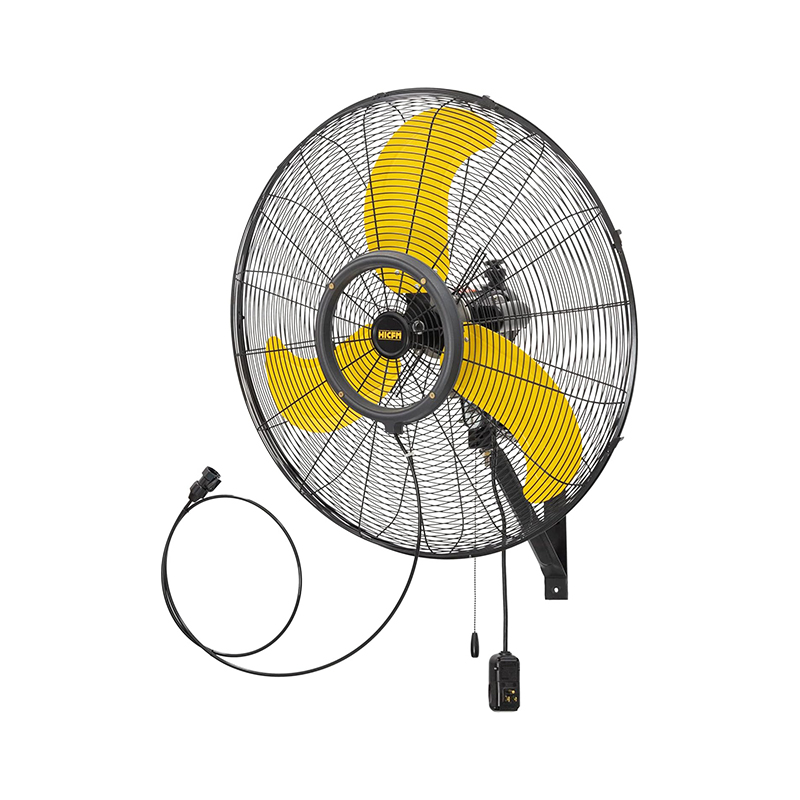
Selecting the right hardware requires strict attention to engineering details. You cannot judge outdoor fans by their blade span alone. Motor enclosures and weatherproofing determine the true lifespan of your investment.
Open Drip Proof (ODP) motors allow ambient air to circulate directly over internal windings. They function perfectly indoors in climate-controlled rooms. However, they fail quickly outdoors. Airborne moisture, dust, and insects easily enter ODP housings. This intrusion causes rapid internal corrosion.
Conversely, Totally Enclosed Air-Over (TEAO) motors seal internal electrical components completely. The fan blade itself blows exterior air across the sealed motor shell. This process cools the internal mechanisms safely. Totally Enclosed Fan Cooled (TEFC) motors operate similarly but include a dedicated cooling fan on the rear shaft.
Best Practice: Mandate TEAO or similar sealed motors for any environment exposed to rain, sawdust, or high humidity.
Common Mistake: Buying cheap indoor-rated fans for covered patios. Ambient humidity alone will destroy an unsealed motor within months.
Ingress Protection (IP) ratings define exact weather resistance levels. You must break down the IP rating scale realistically for outdoor use.
IP44 protects equipment against splashing water from any direction. It works well for deep, covered patios. However, IPX5 or higher remains strictly required for direct rain exposure. Material construction also dictates weather resistance heavily. Powder-coated steel resists standard rust effectively. UV-resistant industrial polymers prevent sun degradation over time. Stainless steel remains the premium choice for coastal environments.
Table: IP Rating Breakdown for Outdoor Cooling
| IP Rating | Water Resistance Level | Best Application Scenario |
|---|---|---|
| IP44 | Splashing water from any angle | Fully covered patios and enclosed porches |
| IPX5 | Low-pressure water jets (direct rain) | Exposed decks, pergolas, and open loading docks |
| IPX6 | High-pressure heavy water jets | Marine environments or industrial washdown areas |
You must calculate airflow requirements accurately. Provide a baseline metric for your specific square footage. We recommend 3,000 to 4,000 CFM for standard residential patios. Industrial warehouses often demand 6,000+ CFM per unit for adequate worker relief.
Throw distance measures how far air travels before dissipating. Volume (CFM) merely measures raw air displaced per minute. A fan might boast high CFM but feature poor blade aerodynamics. This results in a frustratingly short throw distance. You need a focused air column to reach distant corners efficiently.
Moving 95°F hot air provides minimal physiological relief. Standard fans merely speed up sweat evaporation slightly. To drop ambient temperatures actively, you need a specialized solution. Incorporating an Outdoor Misting Wall Fan utilizes evaporative cooling effectively. This technology flash-evaporates water droplets instantly. The phase change pulls heat energy directly from the surrounding air.
Not all misting systems perform equally. High-pressure systems operate around 1,000 PSI. They create microscopic water droplets designed for dry cooling. The fine mist flashes into vapor instantly before touching the ground. This keeps seating areas perfectly dry.
Low-pressure systems attach directly to a standard garden hose. They produce much larger water droplets. These heavy droplets fall faster than they evaporate. They often leave surrounding surfaces distinctly damp or wet.
Misting fans excel in arid climates featuring naturally low humidity. Dry ambient air absorbs added moisture rapidly. The temperature drop feels dramatic and immediate in these regions.
Risk: Using misting units in highly humid environments creates significant problems. In sticky climates, misting adds unevaporated moisture to already saturated air. This increases human discomfort drastically. It also creates dangerous slip hazards on smooth warehouse floors. Always check local humidity averages before investing in misting technology.
Improper installation ruins even the highest-quality cooling equipment. You must address electrical, structural, and maintenance factors proactively to ensure safety.
Water and electricity create lethal combinations outdoors. Outdoor and semi-outdoor installations strictly require GFCI (Ground Fault Circuit Interrupter) protected outlets. GFCI technology prevents fatal shocks if moisture contacts electrical prongs.
Address the serious risks of using indoor-rated extension cords. Never use cheap temporary wiring for permanent outdoor applications. Sunlight degrades standard cord jackets quickly. Exposed wires then pose severe fire and shock hazards.
High-CFM fans generate intense rotational torque. They also produce continuous micro-vibrations during operation. Standard drywall anchors cannot handle these dynamic loads.
Installation rule: Brackets must anchor directly into solid studs, masonry, or structural steel. Do not mount heavy industrial fans onto basic siding or decorative fascia boards. The sheer weight and vibration will rip the hardware out eventually. Use heavy-duty lag bolts or specialized masonry anchors for secure attachments.
Outdoor equipment requires consistent upkeep to survive long-term. You face a strict requirement for seasonal cleaning of blades. Dust accumulation throws the motor out of balance quickly. An unbalanced blade destroys internal motor bearings prematurely.
For misting models, hard water presents a major ongoing challenge. Calcium scaling inside tiny misting nozzles ruins delicate spray patterns. You must apply regular calcium-dissolving treatments to maintain performance. Winterization also remains mandatory in freezing climates. Purge all water lines entirely to prevent catastrophic pipe bursts.
Evaluating upfront pricing against long-term durability determines true investment success. Buying cheap equipment twice often costs more than buying quality equipment once.
A basic $50 box-store fan will rust and fail in one season outdoors. Flimsy internal components simply cannot survive harsh weather exposure. Alternatively, a $150 to $300 industrial-grade wall fan easily offers a 5 to 10-year lifespan. Spending slightly more upfront saves substantial replacement money and installation labor later.
Follow this structured checklist to finalize your hardware selection systematically.
Measure your exact square footage first. Identify the required CFM baseline necessary to cycle the air effectively in your space.
Check your local humidity levels and water access points. Decide carefully between a traditional dry fan and a specialized misting fan.
Verify your structural mounting points meticulously. Ensure dedicated GFCI power availability exists precisely at the installation site.
Filter your final options by IP rating and motor enclosure type. Match these ratings directly based on actual exposure levels. A covered patio requires different protection than an open loading dock.
Purchasing an outdoor wall fan represents a crucial investment in site usability and overall safety. Proper cooling transforms miserable, stagnant environments into comfortable, highly productive spaces.
Prioritizing sealed motor enclosures prevents frustrating early equipment failures. Verifying your realistic CFM needs ensures you avoid painful buyer's remorse later.
Take action today. Measure your target space immediately. Verify your load-bearing mounting points carefully. Always review manufacturer specification sheets for verified IP ratings before finalizing your purchase.
A: No. Even under a roof, outdoor humidity and temperature fluctuations will corrode an unsealed indoor motor and create electrical hazards. Indoor fans lack the necessary protective seals to survive outside.
A: A standard 2-car space typically requires a fan pushing at least 3,000 to 4,500 CFM to effectively cycle stagnant air. This volume ensures fumes dissipate quickly and occupants feel noticeable cooling relief.
A: Low-pressure systems attached to standard hoses can leave surfaces damp. High-pressure systems create a fine mist that evaporates instantly, provided the ambient humidity is low enough to absorb the moisture.
A: It means the fan is protected against splashing water from any direction, suitable for covered patios but not designed to withstand direct, heavy rainfall. You need IPX5 or higher for fully exposed outdoor areas.


