- All
- Product Name
- Product Keyword
- Product Model
- Product Summary
- Product Description
- Multi Field Search
Please Choose Your Language


Views: 0 Author: Site Editor Publish Time: 2026-07-17 Origin: Site


Cooling semi-open spaces presents a unique challenge for homeowners and professionals alike. Traditional HVAC systems waste massive amounts of energy in workshops or covered patios. They simply cannot keep up when walls remain open to the outside. You face specific environmental stressors in these demanding areas. Airborne debris like sawdust quickly ruins unprotected motors. Fluctuating humidity breaks down standard indoor equipment prematurely. Rapid air dissipation makes conventional cooling highly inefficient. The air escapes rapidly before cooling anyone down effectively. We must take a targeted, strategic approach to solve this problem. This article provides a technical and functional framework. You will learn how to evaluate your space constraints properly. We will guide you through assessing your precise airflow requirements. You can then determine whether a heavy-duty industrial unit or an adjustable sweeping fan serves you best. Understanding these mechanical distinctions ensures you invest wisely in the correct cooling solution.
Terminology varies by grade: While often used synonymously in consumer markets, industrial "pedestal fans" typically prioritize high-velocity straight airflow and durability, whereas "stand fans" prioritize adjustability and oscillation.
CFM over diameter: Purchasing decisions should be driven by Cubic Feet per Minute (CFM) ratings rather than blade diameter alone.
Environment dictates motor type: Workshops require sealed motors to prevent dust ingress; covered patios require moisture-resistant materials (IP ratings).
Noise vs. Velocity trade-off: Higher velocity metal-blade pedestal fans generate significant decibel levels, making them less suitable for conversational patio environments.
Manufacturers engineer cooling equipment for specific environments and applications. Consumers frequently confuse industrial units with standard residential models. Understanding the foundational design differences helps you make an informed choice.
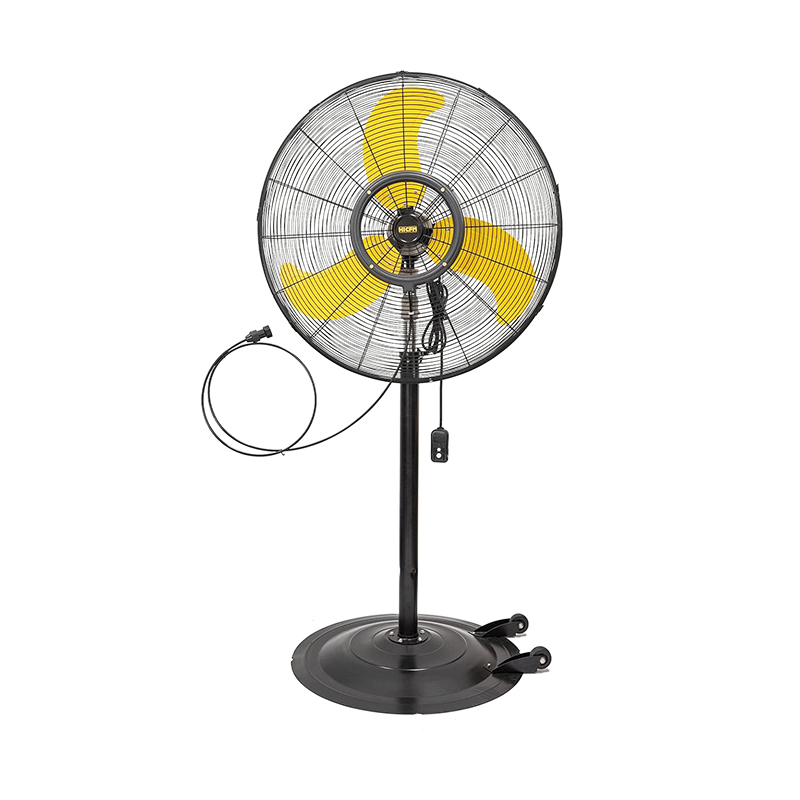
Industrial fans prioritize raw power and durability over aesthetic appeal. They utilize a heavy, weighted base. This foundation prevents movement during high-speed operation. Height adjustability remains limited or entirely fixed. These units rely on robust metal shrouds. They feature rugged metal blades designed to move high volumes of air. They achieve massive Cubic Feet per Minute (CFM) ratings. You can expect them to push air across long distances efficiently. These units often utilize direct-drive motors. Direct-drive configurations eliminate belts and gears. They reduce moving parts and minimize mechanical failure rates. When you purchase a heavy-duty Pedestal Fan, you invest in industrial-grade reliability.
Light-commercial models focus on versatility and immediate localized comfort. They feature a telescoping pole. This design allows for broad height adjustability. You can easily raise or lower the airflow target. Manufacturers build them using lighter materials. They commonly incorporate plastics and thin alloys. These lightweight materials facilitate smooth wide-angle sweeping motions. Oscillation mechanisms allow the unit to cover a wider physical footprint. An Oscillation Stand Fan prioritizes quiet operation. They offer multiple variable speeds. You can easily tailor the breeze to your immediate comfort needs without disrupting conversation.
Choosing the right equipment requires a clear understanding of your specific environment. You must define what successful cooling looks like for your distinct application.
You cannot guess your airflow needs. You must calculate them mathematically. Purchasing decisions rely heavily on CFM ratings.
Measure your space length, width, and height.
Multiply these numbers to find your total volume in cubic feet.
Determine the required air exchanges per hour for your specific activity.
Divide the total volume by 60, then multiply by your desired air exchange rate.
Different environments demand completely different standards. The workshop standard requires rapid air turnover. High air exchange clears toxic fumes and dangerous airborne particulates quickly. The patio standard operates differently. You require lower overall velocity here. The primary focus shifts to evaporative skin cooling. You want a gentle breeze, not a wind tunnel.
Your environment dictates the physical protection your equipment needs. You must evaluate the dust levels thoroughly. Woodworking and metal grinding generate massive amounts of particulate matter. This dust destroys unprotected internal components. Next, assess your moisture exposure risks. Covered patios still face wind-blown rain. They experience periods of extremely high humidity. Look closely at Ingress Protection (IP) ratings. Higher IP numbers indicate better protection against solid objects and liquid intrusion.
Noise levels dramatically impact usability. You must define the acceptable decibel (dB) limit for your space. Industrial environments tolerate higher noise levels easily. Residential patios require much quieter operation. High-velocity blades create a loud chopping sound. This sound easily drowns out normal conversation. Consider how noise impacts your daily activities before finalizing your purchase.
Heavy-duty models serve specific, demanding applications perfectly. They dominate in environments requiring massive air displacement.
These units excel in large workshops and expansive garages. They also work well on deep, open-air patios requiring targeted, high-velocity air delivery. Mechanics, woodworkers, and industrial fabricators rely on them daily. They provide the necessary force to improve challenging working conditions.
You can expect exceptionally deep air penetration. The powerful thrust easily pushes through ambient crosswinds in semi-open spaces. They establish a strong, consistent directional breeze. This forceful airflow disrupts stagnant hot pockets near ceilings or deep corners.
Engineers design these units to survive harsh treatment. The metal blades resist warping from intense ambient heat. The heavily weighted bases prevent tipping. Accidental bumps from rolling tool carts will not knock them over easily. Strong external drafts cannot destabilize them. Their rugged frames withstand years of heavy use.
Power comes with notable compromises. You face limited adjustability regarding height and tilt angles. The massive motors consume significantly more electrical power. They generate substantial operating noise. This high decibel output interferes with casual conversation and phone calls.
Adjustable sweeping models provide a completely different cooling experience. They focus on flexibility, comfort, and quiet operation.
These models serve seating areas on covered patios beautifully. They perform perfectly in smaller, cleaner work areas. You will find them ideal for electronics assembly benches or painting stations. They improve comfort without disrupting the immediate environment.
They distribute a gentle, sweeping breeze over a remarkably wide area. The oscillating motion cools multiple occupants simultaneously. They accomplish this without displacing lightweight materials. You can cool down a desk without blowing away crucial paperwork or delicate components.
Versatility stands out as their strongest feature. They offer highly adjustable telescoping poles. Their lightweight construction allows for incredibly easy relocation. You can pick them up and move them effortlessly. Manufacturers structurally design them for low decibel output. They keep your environment peaceful and relaxing.
They cannot match industrial units in raw power. You receive a significantly lower overall CFM rating. The plastic components degrade faster under harsh UV exposure. Physical impacts easily crack the lightweight housings. Furthermore, the internal oscillation mechanisms rely on plastic gears. These gears are highly prone to premature failure in dusty environments.
You must look beyond basic marketing claims. Deep technical specifications determine how long your equipment will survive.
| Specification Focus | Heavy-Duty Pedestal Models | Oscillating Stand Models |
|---|---|---|
| Motor Enclosure | Often TEAO (Totally Enclosed Air Over) | Open-Ventilated |
| Blade Material | Rigid Aluminum or Steel | Molded Plastic or Thin Alloy |
| Adjustability | Fixed or limited height adjustments | Fully telescoping poles |
| Noise Level | High (65+ dB) | Low to Moderate (40-55 dB) |
| Ideal Application | Dusty workshops, large garages | Covered patios, clean hobby rooms |
The motor enclosure determines the lifespan of your unit. You must contrast open-ventilated motors with Totally Enclosed Air Over (TEAO) motors. Open-ventilated motors allow ambient air to flow directly over internal copper windings. They remain perfectly acceptable for clean covered patios. However, dust ruins them quickly. TEAO motors seal the internal components completely. Airborne debris cannot penetrate the housing. TEAO motors are mandatory for dusty workshops.
Blade design changes airflow dynamics completely. Aggressive metal blade pitches generate substantially more thrust. They scoop larger volumes of air per revolution. However, they require larger, louder motors to overcome the increased air resistance. Conversely, aerodynamically molded plastic blades slice through the air quietly. They reduce drag efficiently but fail to generate massive thrust.
Safety certifications matter immensely in commercial and semi-outdoor spaces. Commercial shops must follow strict guidelines. Look carefully for OSHA-compliant grill spacing. OSHA requires grill gaps small enough to prevent fingers from reaching the blades. If you plan a patio deployment, check the electrical cord. You must utilize UL-listed outdoor-rated cords. Standard indoor cords pose severe electrocution risks when exposed to high humidity or accidental splashing.
Purchasing the equipment represents only the first step. You must understand how to operate and maintain it safely.
You must assess the center of gravity carefully. Tall equipment presents inherent tipping risks. Stand models extended to their maximum height become highly vulnerable. They easily fall over on uneven patio pavers. Tripping over extension cords brings them crashing down immediately. Industrial units mitigate this risk. They utilize massively heavy cast-iron bases to keep the center of gravity low.
Different models require different levels of ongoing care. You should evaluate how easily the safety grill unclips for cleaning. Dust buildup on the blades reduces CFM output significantly. You must clean them regularly. Note the internal mechanics carefully. An oscillating model requires periodic internal gear lubrication checks. The moving parts dry out over time. Conversely, direct-drive industrial units are largely maintenance-free. You only need to perform a quick blade wiping occasionally.
Electrical cords create massive headaches in busy environments. You must plan for proper cord management. Do not string cords across main walkways. They create severe trip hazards in high-traffic work zones. Consider installing ceiling drops or utilizing heavy-duty rubber floor cord covers. Secure power routing protects your equipment from violent, sudden unplugging.
Choosing the correct cooling equipment depends entirely on matching mechanical specifications to environmental realities. You must objectively evaluate your space before spending any money.
Understand your environment: Demanding, dusty, or expansive utility spaces require the raw power and sealed durability of heavy-duty units.
Prioritize comfort where needed: Leisure spaces and clean work zones benefit greatly from the variable, quiet, and broad-sweeping comfort of adjustable oscillating models.
Protect your investment: Always match the motor enclosure type (TEAO vs. open-ventilated) to your expected dust and moisture levels.
Consider the noise trade-off: High velocity always produces higher decibels; plan your layout accordingly to protect conversations.
Your immediate next step requires simple math. Grab a tape measure and calculate the specific CFM required for your target square footage. Determine your required air changes per hour. Once you establish your baseline CFM number, you can confidently finalize a brand or model choice.
A: Generally, no. Standard indoor models lack proper moisture sealing. Fluctuating outdoor humidity corrodes internal electrical contacts quickly. Using them outdoors usually voids the manufacturer's warranty. You must purchase a unit explicitly rated for damp or outdoor locations to ensure safety and longevity.
A: A standard two-car garage contains roughly 4,000 to 5,000 cubic feet of volume. To achieve a respectable 10 air exchanges per hour, you need a unit rated between 650 to 850 CFM minimum. For demanding dust clearance, aim for 1,500 to 2,500 CFM.
A: No. Blades only move air; they do not drop ambient temperatures. However, rigid metal blades allow manufacturers to design steeper pitches and run motors at higher RPMs. Metal does not flex under heavy load. This allows metal-blade models to push significantly higher air volumes over longer distances.
A: Yes. Airborne particulate aggressively interacts with exposed internal oscillation gears over time. Fine sawdust or metal shavings mix with the factory gear grease. This creates a highly abrasive paste. It strips the delicate plastic gears, leading to complete mechanical failure of the sweeping function.


